Sharpen your mind with free brain training games that challenge memory, logic, spatial reasoning, and vocabulary. Each game targets different cognitive skills in sessions under 10 minutes - no downloads, no ads.
Research published in the journal Nature found that certain types of game-based cognitive training can improve attention, working memory, and problem-solving skills. Weekly Arcade's brain training collection targets different cognitive domains: vocabulary and pattern recognition (Wordcrest), strategic planning and spatial reasoning (Chess 3D, 2048), working memory (Memory Match), and multi-tasking under pressure (Fieldstone). All games run in your browser with no downloads needed.
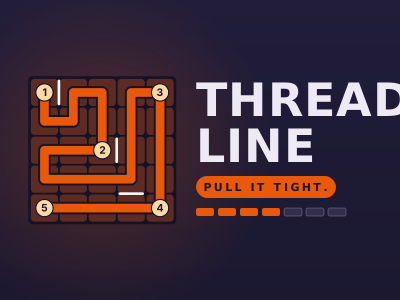
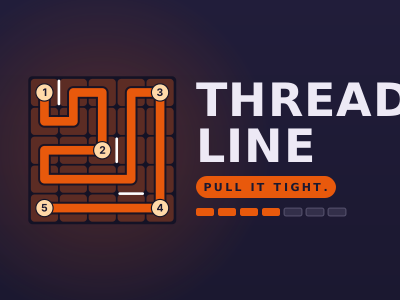
Route planning - Read a whole grid before you touch it and spend a fixed bend budget wisely in Threadline
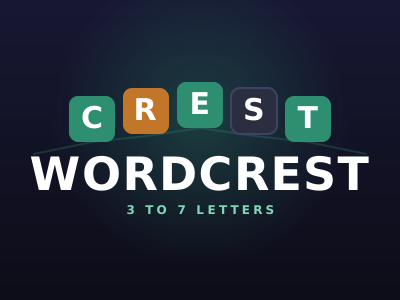
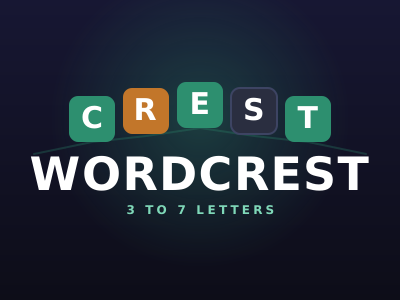
Vocabulary and language - Build word skills with daily Wordcrest puzzles in 2-3 minutes
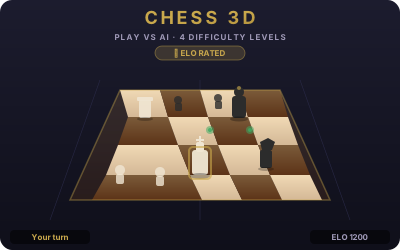
Strategic thinking - Develop planning skills across 4 AI levels in Chess 3D
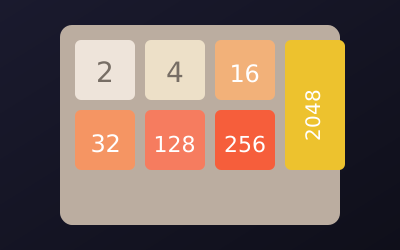
Spatial reasoning - Train number logic and spatial planning with 2048
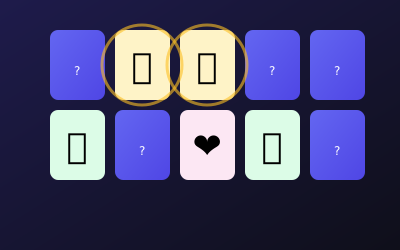
Working memory - Strengthen recall and pattern matching in Memory Match
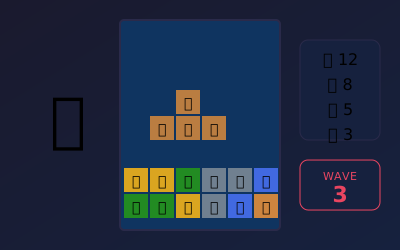
Multi-tasking - Balance puzzle-solving with strategy in Fieldstone
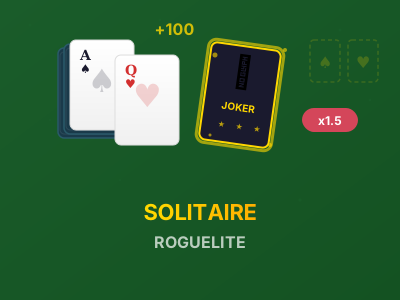
Problem solving - Plan card sequences and use Jokers strategically in Solitaire Roguelite
Daily practice - Wordcrest offers a new challenge every day for consistent training
Progress tracking - Leaderboards and achievements track your improvement over time
What these games actually exercise
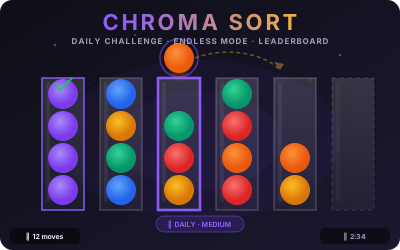
The seven games here work different faculties, and it is worth knowing which. Memory Match is straightforward recall under a move or time limit. Wordcrest is deduction from constrained feedback, climbing from three-letter words to seven. 2048 and Chroma Sort are spatial planning - the skill is seeing three moves ahead on a board that changes after each one. Chess 3D is the deepest, with an engine calibrated at four real Elo targets from 600 to 1900. Fieldstone and Solitaire Roguelite add resource planning on top of pattern work. Playing across the group exercises more than grinding one.
A note on what brain training can and cannot do
We are not going to claim these make you smarter. The published evidence on transfer from puzzle games to general cognition is weak, and any site telling you otherwise is selling something. What these games reliably do is give you a short, self-contained problem with clear feedback and a difficulty that adapts - Wordcrest lengthens its words as you succeed, Chess 3D has four opponent strengths, Memory Match has three board sizes against three limits. That is a good daily habit on its own terms, without the neuroscience claims.
Brain Training Games FAQ
Are these brain training games free?
Yes, all seven, with no downloads, no ads, no subscription and no account needed. There is no premium tier - this is not a brain-training app with a paywall behind the first three exercises.
Do brain training games actually work?
They reliably make you better at the game you practise. Evidence that puzzle games improve general cognition is weak, and we are not going to claim otherwise. What they do offer is a short daily problem with clear feedback and adjustable difficulty, which is worth something on its own terms.
Which game is best for memory specifically?
Memory Match, which is a pure recall task, sized three ways - 6, 8 or 10 pairs - against either a move cap or a countdown. Its zen mode removes both limits and does not score, if you want the exercise without the pressure.
Is there a daily brain game?
Wordcrest runs a new word every day, and Chroma Sort has a daily challenge alongside its endless levels. Both reset at the same instant for every player rather than at local midnight, so the day's puzzle is genuinely shared.
Are these suitable for older players or children?
Yes. There is no violence, no chat, no ads and nothing to purchase in any of them, and several have difficulty settings that go genuinely easy - Chess 3D's lowest opponent is a 600 Elo beginner, and Memory Match's easy board is six pairs with a generous limit.